
Most In-Demand Jobs in Serbia During 2026
 29 May 2026
Blog
29 May 2026
Blog
The labor market continues to grow, with the highest demand for employees recorded in manufacturing, construction, logistics, hospitality, and agriculture. These sectors are experiencing ongoing workforce shortages, leading many employers to expand their recruitment efforts and increasingly hire foreign workers to meet business needs.
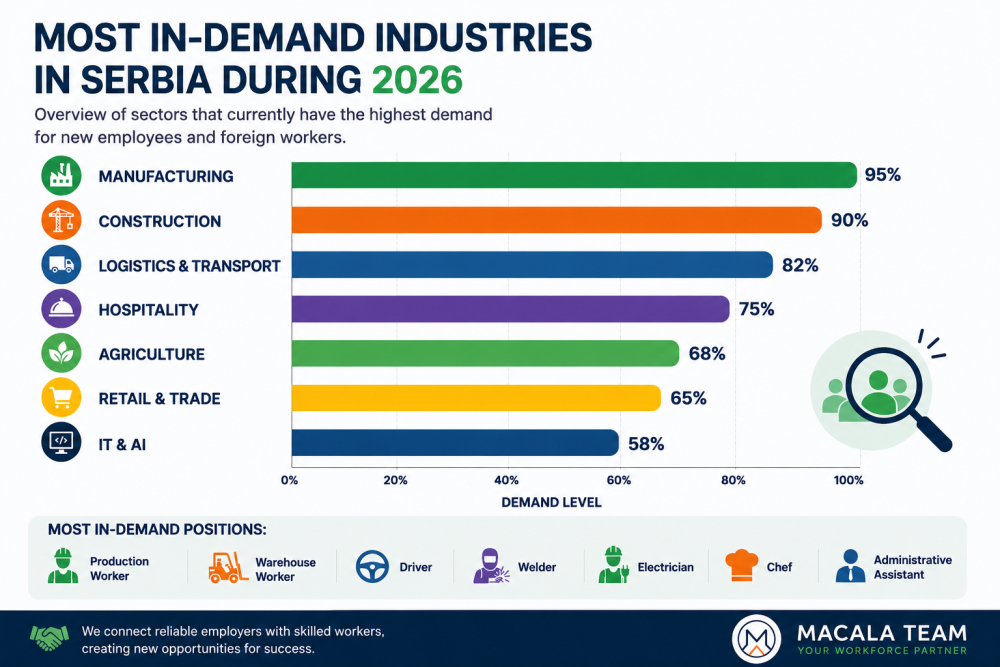
The Serbian labor market continues to evolve throughout 2026, driven by economic growth, labor shortages, and the increasing employment of foreign workers. Employers across the country are facing challenges in finding qualified employees, particularly in manufacturing, construction, logistics, hospitality, and skilled trades.
According to labor market data and industry analyses, the most in-demand positions include production workers, warehouse workers, drivers, sales associates, machine operators, administrative staff, as well as hospitality workers such as chefs and waiters. At the same time, demand continues to grow for skilled tradespeople, including electricians, plumbers, welders, carpenters, and construction workers.
A growing number of companies are turning to foreign workers to fill vacancies that cannot be covered by the domestic workforce. The highest demand for foreign employees can currently be found in manufacturing, construction, logistics, agriculture, and hospitality.
There is also an increasing need for professionals in information technology, artificial intelligence, and automation. However, operational and skilled labor positions still account for the largest share of demand in Serbia’s labor market.
As workforce shortages continue across key industries, international recruitment remains an important solution for employers seeking reliable and qualified candidates. For job seekers, this creates new opportunities for stable employment and long-term career development in Serbia.
Latest Posts